How Sofia Olofsson Is Helping Shape the Future of AI Governance
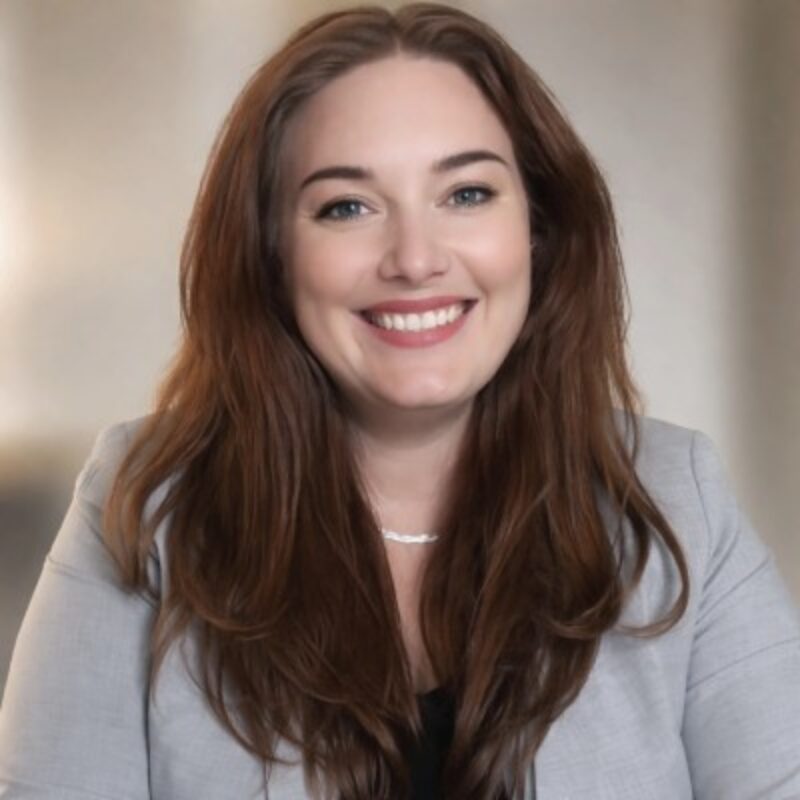
Artificial intelligence is transforming everything from public services to global economies, and international organizations are working to keep pace with the policy questions it raises. As an Associate Programme Management Officer with the United Nations Office for Digital and Emerging Technologies (ODET), Sofia Olofsson MPA ’18 supports that work – the latest posting in a UN career that has spanned development finance, gender equality, and innovation.
Drawing on the interdisciplinary foundation she built at the Brooks School, Sofia has moved across a range of technical and policy domains over the course of her career, each with its own set of governance questions. Her path demonstrates how public policy, data, law, and international affairs increasingly intersect in international public service, and how a single toolkit, built early, can travel across very different postings.
Q. What inspired you to pursue a career in digital policy and AI governance?
I kept noticing a gap between the sophistication of international policy language and the lived reality of the communities those policies were meant to serve. That tension showed up across every UN role I held before ODET: in development finance, in gender equality work, in digital policy. AI felt like the most urgent version of that question I’d ever encountered. The technology is moving fast, the rules are being written now, and the default, unless there is an intervention, is that people with the least power will have the least say.
I feel genuinely grateful to be working on these issues right now; it’s hard to think of a set of questions that feels more urgent at this moment.
Q. How did the Brooks School prepare you for a career in AI governance?
Cornell gave me a genuinely interdisciplinary foundation, training in evaluation, monitoring, statistics, and brief preparation that let me see a project through from start to finish, rather than specializing narrowly in one piece of the process. That range has mattered more than I expected.
In this field, you’re often the person who has to move from designing an evaluation framework, to interpreting the data it produces, to translating that into a brief that a policymaker with five minutes to spare can actually use. Having built each of those muscles at Cornell means I can move across that full arc rather than handing pieces off at each stage.
Q. Can you tell us about a Cornell or Brooks experience that had a lasting impact on your career?
One of the most lasting influences on how I work came from studying results-based management under Professor John Mathiason, a former D-level UN professional who’d spent his career inside the system before teaching.
Learning that framework from someone who’d actually had to make it work in practice, not just on paper, shaped how I think about designing programs and measuring whether they’re actually achieving what they set out to do. It’s a lens I still carry into every project I touch: define what success looks like up front, build in the means to measure it, and stay honest about the gap between intention and outcome.
Q. Looking back, what made Cornell the right place to prepare you for your career?
Two things stand out. First, the flexibility to build that interdisciplinary skillset, combining policy analysis with quantitative methods, economics, and law. Second, the exposure to international perspectives from day one, which shaped an instinct I still rely on: to think beyond any single national or regional frame. That’s been essential across every UN posting I’ve held, not just my current one.
Q. What advice would you give students who want to make a meaningful impact in AI and emerging technologies?
Don’t wait until you have the perfect credential or the perfect job title to start building a point of view.
The field needs people who can think clearly about hard problems and communicate that thinking accessibly, and that’s a practice, not a destination. Write publicly. Engage with the people doing the work you care about.
And take interdisciplinary training seriously. The most interesting and consequential problems: climate, AI, inequality, don’t respect disciplinary boundaries, and the people who can move fluently across them are the ones who tend to have the most impact.
This interview has been edited for length and clarity. Sofia Olofsson graduated from Cornell in 2018 with a Master of Public Administration, prior to the establishment of the Cornell Jeb E. Brooks School of Public Policy. References to the Brooks School reflect the school’s current name.

Learn More About the MS-DSP
MS in Data Science for Public Policy (DSP):
The world needs data-literate policy leaders. That could be you.
Master technical and ethical data skills to inform smarter, more just policy in a fast-moving digital world with the MS-DSP.