
What is a Master of Science in Data Science for Public Policy?
Data science is reshaping how organizations understand problems and make decisions that affect millions of people. The Brooks School’s MS-DSP combines advanced quantitative methods with policy expertise, teaching students how to analyze data, evaluate evidence, and translate insights into action.
Policy is at the heart of the MS-DSP. Graduates learn to leverage data responsibly across government, nonprofit, private-sector, consulting, healthcare, education, and technology settings where data-informed decision-making is increasingly essential.
Skills You’ll Develop:
- Statistical analysis and causal inference
- Machine learning and predictive analytics
- Data visualization and storytelling
- Policy evaluation and program assessment
- Artificial intelligence and emerging technologies
- Ethical data governance and responsible AI
- Decision-making with data
Preparing Leaders for a Data-Driven World
Residential MS-DSP Degree
Launch your career at the intersection of data and policy. The Brooks School’s 12-month, Ivy League Residential MS in Data Science for Public Policy equips students with the analytical, technical, and policy skills needed to tackle complex societal challenges.
Explore the Residential MS-DSPExecutive MS-DSP Degree
Advance your leadership through data-driven decision-making. The 16-month Executive MS in Data Science for Public Policy (EMSDSP) is designed for experienced professionals with 5-10+ years who want to strengthen their analytical fluency while continuing to work.
Explore the Executive MS-DSPApplied Learning: Capstone Experience
Students work on real-world policy challenges through applied projects, research collaborations, and experiential learning opportunities. Capstone experiences allow students to partner with public, private, and nonprofit organizations to analyze data, develop recommendations, and present actionable solutions to real clients and stakeholders.
Learn more about student experiencesWhich MS-DSP Program is Right for You?
Feature | Residential MS-DSP | Executive MS-DSP |
| Duration | 12 months | 16 months |
| Designation | STEM-Designated | STEM-Designated |
| Format | Full-time, in-person in Ithaca | Hybrid format designed for working professionals |
| Experience Level | Recent graduates and early-career professionals | Mid-career and senior professionals |
| Career Goal | Launch or accelerate a data-focused policy career | Advance leadership and decision-making capabilities |
| Schedule | Full-time study | Continue working while earning your degree |
| Ideal Candidate | Individuals seeking immersive academic and career development experience | Professionals with 5-10+ years of experience seeking flexible graduate education |
| Learn more about the residential MS-DSP | Learn more about the executive MS-DSP |
Who Should Apply?
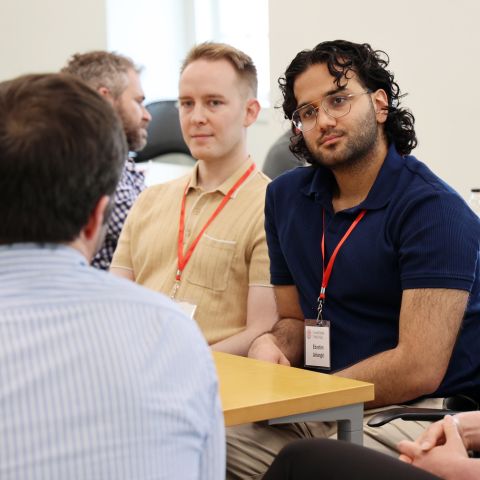
One of the most common questions prospective students ask is, “Do I need a computer science or data science background?”
No. The MS-DSP welcomes applicants from a wide range of academic and professional backgrounds, including:
- Public Policy
- Economics
- Political Science
- Sociology
- Government
- Business
- Engineering
- Mathematics
- Computer Science
- Public Health
- International Affairs
Successful applicants demonstrate curiosity, analytical thinking, and a desire to use data to solve real-world problems.
Prior coding experience can be helpful, but applicants are not expected to be software engineers or have an advanced background in calculus. The program is designed to help students develop quantitative and technical skills within a policy-focused environment.

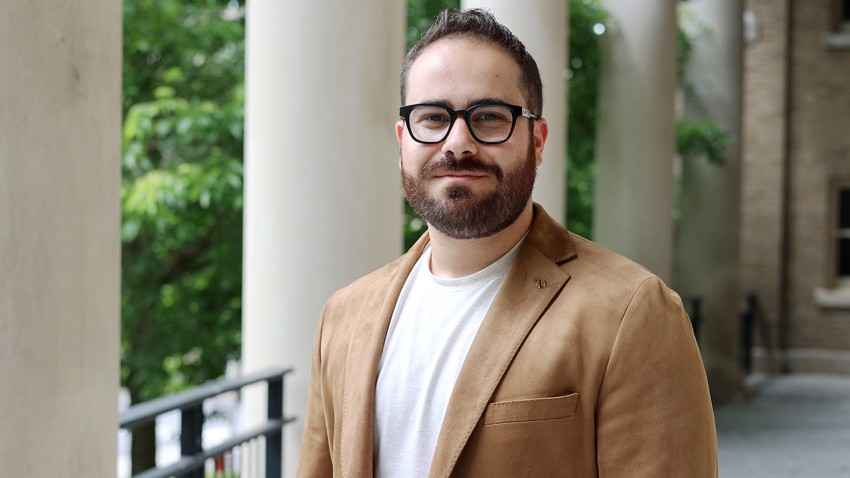

As Senior Associate Dean for Academic Affairs at the Brooks School, Maria Fitzpatrick helped shape the vision behind the MS in Data Science for Public Policy (MS-DSP), a program designed for a world where technical tools alone are no longer enough.

Going forward, it’s this intersection of tools, like AI, and their use and impact on humans that’s going to be one of the biggest challenges of our society.
– Maria Fitzpatrick, Senior Associate Dean for Academic Affairs
Interested in Appyling?
Explore the program that best fits your goals.
Have Questions?
Start your journey toward becoming a leader who can turn data into meaningful public impact.
Contact Address
Cornell University
Ithaca, NY 14853