
Is the MS-DSP Right for You?
The MS-DSP is designed for students and early-career professionals who want to combine advanced technical expertise with a commitment to solving complex public challenges.
You may be a strong fit if you:
- Want to apply artificial intelligence and machine learning to societal challenges.
- Enjoy working with data to improve decision-making.
- Are interested in technology policy, government innovation, or civic technology.
- Want rigorous technical training grounded in ethics and public impact.
- Are seeking a STEM-designated Ivy League master’s degree that can be completed in one year.
Students come from a variety of backgrounds in:
- Analytics
- Engineering
- Economics
- Mathematics
- Statistics
- Public Policy
- Political Science
- Social Sciences
Why Choose Cornell’s MS-DSP?
Governments and organizations increasingly rely on artificial intelligence, predictive analytics, and evidence-based decision-making. Today’s leaders need technical expertise alongside the ability to understand policy implications, ethics, and human impact.
The MS-DSP curriculum is designed to prepare graduates to bridge those worlds. Across five core domains, students build a technical and policy toolkit that prepares them to apply AI, predictive analytics, and data science to solve today’s most pressing public policy challenges.
Career-Ready Skills
Political Policy Analysis and the Policy Process
Understand how governments, political institutions, and policymaking processes shape public policy and influence data-driven decisions across local, national, and global contexts.
Fundamentals of Microeconomics for Policy
Learn how individuals, organizations, and markets respond to incentives, and how economic analysis informs effective public policy.
Statistics and Data Analytics
Develop a strong foundation in statistics, programming, predictive modeling, machine learning, AI, and unstructured data analysis to transform complex data into actionable policy insights.
Management and Leadership
Develop the leadership and management skills needed to guide teams, organizations, and data-driven decision making across sectors.
Integrative Thinking and Policy Communication
Develop the critical thinking and communication skills needed to interpret data, communicate evidence effectively, and translate technical analysis into informed public policy decisions.
What You’ll Study
This 41-credit curriculum culminates in an engaged-learning capstone project completed with an external policy partner organization. Students apply data science, AI, and analytical tools to address real public policy challenges while working directly with practitioners and faculty mentors.

Summer (June–August)
Foundations
- 6 Credits
- Courses:
- Statistics for Public Policy
- Data Management and Programming
Build a strong foundation in statistics, programming, and data management with world-renowned faculty who have extensive experience preparing students for the advanced technical coursework that follows throughout the program.

Fall (August–December)
Technical Skills & Policy Foundations
- 16 Credits
- Courses:
- Intermediate Microeconomics for Public Affairs
- Foundations of Machine Learning for Public Policy
- Political Analysis and the Policy Process
- Causal Inference and Data Analysis for Public Policy
- Data Visualization for Public Policy
- Designing Your Career in Public Policy, Data Science and Sustainability
Advance your technical data science skills through coursework in data analytics, regression, machine learning, and data science modeling while learning how economics, public policy, and the social sciences complement technical data science skills.

Winter Session (January)
Advanced Data Science Modeling
- 3 Credits
- Courses:
- Unstructured Data Science Modeling
Expand your technical toolkit by learning the tools and techniques used to analyze unstructured data, including natural language processing, APIs, and other emerging approaches that go beyond traditional data science applications.

Spring (January–May)
Leadership & Application
- 16 Credits
- Courses:
- Project Management or Managing and Leading Organizations
- Ethics in Data, Data Science, and AI for Public Policy
- Communication for Public Policy
- Brooks Engaged Learning Capstone
- Elective Course
Develop the communication skills needed to translate data into meaningful public policy action. Explore the ethical questions surrounding how data should be used to solve public policy challenges. Apply your technical and policy expertise through electives and an engaged-learning capstone completed with an external partner organization.
Graduate in May
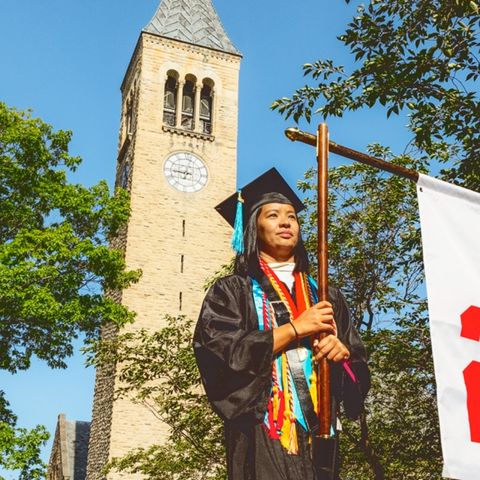
Complete your degree in just 12 months and enter the workforce equipped with the technical, analytical, leadership, and communication skills to use data science and AI to solve complex public policy challenges.
Student Opportunities
Technical Skills for Public Impact
Master machine learning algorithms, causal inference, predictive modeling, statistical analysis, and data visualization using Python—all specifically applied to computational public policy, public interest technology, and evidence-based decision-making.
Ethics at the Center
From algorithmic accountability to AI governance, privacy, transparency, and fairness, ethical decision-making is woven throughout the program so graduates can responsibly deploy technology where it matters most.
Capstone Project: Where Insight Meets Impact
Students collaborate with government agencies, nonprofits, research organizations, and international partners to address real policy challenges through advanced analytics. Potential project areas include AI governance, climate resilience, public health analytics, economic mobility, government modernization, and civic technology.
Learn From Experts Shaping Technology and Policy
Our faculty combines expertise in data science, artificial intelligence, economics, and public policy to prepare students for solving complex societal challenges. Through research, mentorship, and interdisciplinary collaboration, they equip students with the technical skills and policy perspective needed to make meaningful, evidence-based decisions.
Who You’ll Learn Alongside: MS-DSP Class Profile
Students join a close-knit cohort, bringing a wide range of academic backgrounds and perspectives from data science, public policy, engineering, economics, business, and the social sciences. The cohort fosters close collaboration, individualized support, and meaningful engagement with faculty, practitioners, and peers.
Our students include:

Early-career professionals and recent graduates eager to develop technical data science skills and apply them to complex public policy challenges.
Students with undergraduate degrees spanning political science, computer science, electrical engineering, economics, AI, public health, business, statistics, international relations, sociology, and other interdisciplinary fields.
Future leaders pursuing careers across the public, private, and nonprofit sectors, using data science, AI, and advanced analytics to improve decision-making and public outcomes.
Individuals united by a shared commitment to using data, technology, and evidence-based policymaking to address society’s most pressing challenges.
Quick MS-DSP Program Facts

Program Schedule
12 months, starting in June

Degree Awarded
Master of Science in Data Science for Public Policy

Program Format
Full-time residential and STEM-designated
International Students: Eligible students may qualify for up to three years of OPT

Bridging data science and public policy isn’t straightforward—it’s an ongoing experiment in how quantitative tools can truly serve public needs. Our students will join us in exploring this frontier, learning both current methods and how to adapt as AI transforms what’s possible.
– Zhuan Pei, Associate Professor, Executive Director of the Cornell Federal Statistical Research Data Center
Career Pathways
The MS-DSP prepares graduates for careers where technology, analytics, and public policy intersect.

Graduates pursue roles such as:
- Data Scientist
- Policy Data Analyst
- AI Governance Specialist
- Technology Policy Analyst
- Civic Technology Consultant
- Government Innovation Specialist
- Data Strategy Consultant

Target employers span:
- Government agencies
- International organizations
- Technology companies
- Consulting firms
- Nonprofits
- Research organizations
Admissions at a Glance
Application Requirements:
- Bachelor’s degree from an accredited institution
- Unofficial transcripts for application review
- Resume
- Two academic or professional recommendations
- Statement of purpose
- GRE/GMAT not required and not considered
International Applicants:
Proof of English-language proficiency is required through TOEFL, IELTS, or an approved exemption pathway established by Cornell Graduate School.
Work Experience:
Professional experience is welcomed but not required. The program is designed for both recent graduates and early-career professionals.
Looking for Admission Details?
Funding Your Degree
Investing in graduate education is an important decision. The Brooks School is committed to helping qualified students access funding opportunities.
Funding Options Include:
- Merit-based scholarships
- Federal student loans for eligible U.S. students
- Veterans education benefits
- External fellowships and scholarships
- Private educational loan options
All applicants are automatically considered for merit scholarships during the admissions review process. No separate scholarship application is required.
Estimated Tuition
Tuition for students beginning in Summer 2026 is $62,588 for the full 12-month program.