Elif Senvardarli on Building a Career in Sustainable Finance
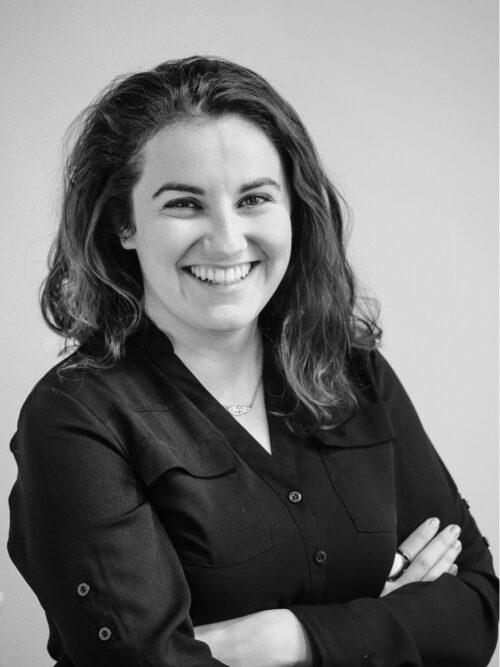 When Elif Senvardarli MPA ’17 came to Cornell, she wanted to explore how the private sector could help address some of the world’s most pressing environmental challenges.
With a background in international development, Senvardarli was interested in the intersection of public and private markets and the role that finance and investment could play in advancing sustainable economic growth. At Cornell, she built an interdisciplinary focus in sustainable finance through coursework in business, finance, economics, statistics, and environmental science. She paired that coursework with hands-on experiences, including analyzing impact investing opportunities in fisheries for a large foundation and evaluating solar power adoption in Latin America for a renewable energy company.
One of those experiences would also launch her career. A summer internship with Calvert Research and Management became a full-time analyst position after graduation. Today, Senvardarli is an executive director of operations for Calvert, part of Morgan Stanley, where her work spans sustainability, data, technology, public policy, and private markets.
We spoke with Senvardarli about her path into sustainable finance, the Cornell experiences that continue to shape her work, and her advice for students hoping to make an impact.
Q. Tell us about your current role and the work you do.
I work in the operations team of an asset management company that specializes in responsible investing. My work sits at the intersection of sustainability, data, technology, public policy, and private markets.
I provide operational oversight to day-to-day activities, support investment activities, direct data & technology resources, strengthen governance, and manage regulatory and operational risk. The position requires an understanding of the evolving sustainability and regulatory landscape to translate into practical business solutions.
My career at Calvert actually started as a summer intern while I was at Cornell. During the internship, I evaluated sustainability-related risks and opportunities in emerging markets for a potential product expansion. I was extremely pleased when the internship was first extended and then became a full-time position as an analyst. After a few years as an analyst, I was able to transition into an operations role, where I continue to grow today.
Q. What inspired you to pursue a career in sustainability?
My background in international development led me to pursue a career at the intersection of public and private markets.
Climate change and environmental degradation are some of the biggest challenges of our generation. Driven by a commitment to address these challenges, I wanted to help harness the private sector to advance sustainable economic growth and support companies working to create positive social impact.
Q. How did Cornell help you build the toolkit you use in your work today?
Cornell gave me the flexibility to build an interdisciplinary toolkit spanning business, finance, economics, statistics, and environmental science. Its rigorous academics, combined with experiential learning opportunities, taught me to approach complex challenges from multiple perspectives and translate theory into practice.
I participated in as many experiential programs as I could, which led to a rich tapestry of experiences. I analyzed impact investing opportunities in fisheries for a large foundation through the Environmental Finance and Impact Investing Fellows program (EFII), evaluated solar power adoption in Latin America for a renewable energy company, and conducted a branding review for a dried fruit company in Cambodia through the Student Multidisciplinary Applied Research Teams (SMART) program. I also conducted a survey on price premiums for sustainable products as part of my coursework.
The lessons from these experiences provided a foundation that continues to shape my work today.
Q. Why was Cornell the right place to help you achieve your goals?
Cornell offered both flexibility and rigor in its curriculum. The opportunity to take classes through the business school helped me shape my unique focus in sustainable finance.
I would also be remiss if I didn’t mention Cornell’s Center for Regional Economic Advancement (CREA). Although it wasn’t directly affiliated with my MPA program, I was able to take advantage of student employment opportunities that had a real impact.
As a land-grant university, Cornell has a number of programs that support communities across Upstate New York. Through CREA, I had the opportunity to support real businesses in the region that were making a difference, including helping launch a clean energy startup competition.
Q. How did experiential learning shape your career?
I knew coming to Cornell that I wanted a practical education focused on real-world problems and experiences. Beyond the more structured experiential programs, being part of student government also helped me discover something unexpected about myself.
As secretary of student government, I discovered a strength in creating, improving, and streamlining processes to help organizations work more effectively. Today, I lead the operations of an investment team managing $50b in assets.
Q. What advice would you give future Brooks students who want to make a meaningful impact in sustainability?
Keep an open mind and lean into your strengths.
Although this advice might seem contradictory, I think Cornell presents a great opportunity to try on many experiential learning opportunities, which can help uncover new areas of interest and polish areas of strength.
This interview has been edited for length and clarity. Elif Senvardarli graduated from Cornell in 2017 with a Master of Public Administration, prior to the establishment of the Cornell Jeb E. Brooks School of Public Policy. References to the Brooks School reflect the school’s current name.

Request More Information
MS in Environmental and Sustainability Policy (ESP):
Turn your passion for the planet into a rewarding career.