
Brooks School Spotlight: Gavin Mosley, Lecturer and Interim Career Coach
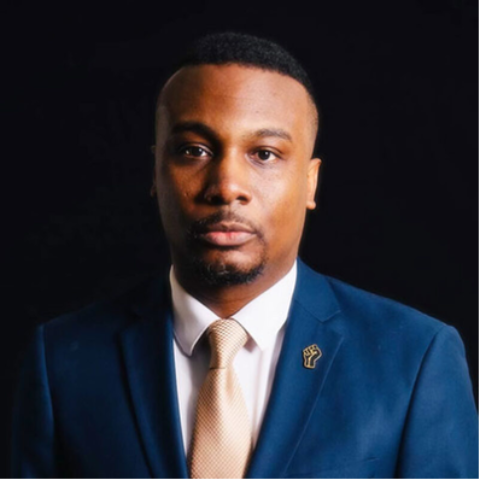
Meet Gavin Mosley, Lecturer and Interim Career Coach
Gavin Mosley is a Lecturer and Career Coach for the Office of Admissions, Student Services, and Career Development.
He teaches courses in environmental and sustainability policy, provides career coaching for MPA students, and manages the capstone experience for the new MS in Environmental and Sustainability Policy (MS-ESP) program. He is a Cornell MPA alumnus.
Q: Could you describe your role as a Lecturer and Career Coach, and how your work supports Brooks students?
I’ve been a lecturer here within the university for four years. Basically, what I do is teach courses around environmental and sustainability policy – in particular, how we incorporate public-private partnerships into our processes in an effort to drive down costs for marginalized communities, both rural and urban.
We have a new Master of Science in Environmental and Sustainability Policy that started this year. One of the backbones of that degree will be the Energy Transitions course, which I’ve been teaching for about four years now. I’ll also teach Comparative Environmental Policy, where we look at environmental policy through the lens of disaster preparedness and how to ensure environments are sustainable and able to recover after disasters.
I’m duly excited to teach the environmental capstone course for the MS-ESP program. In addition, I’ve been given our Career Development course for first-year MPA students, which I’m really excited about as an alum.
I provide career coaching, primarily, for MPA students, helping them navigate internships and career opportunities within the public policy sector. It’s a lot of teaching and coaching, but it’s all good because I love the work.
Q: What’s your favorite advice to give students about career planning or development?
Plan with the end in mind. Don’t necessarily think about your first step being your dream job, but think about your career arc—the 20 to 30 years that we’re going to spend in this thing called work. Think about where you want to end up and start planning backward.
That was the best piece of advice I received when I was an intern with the Tennessee General Assembly more than 15 years ago. Plan with the end in mind and be malleable. Life takes over. There are a lot of different things that happen while you’re trying to become a cabinet secretary, an elected official, or the leader of a law firm.
You fall in love. You have kids. You move. Life happens. You have to allow those dreams to morph and grow. It doesn’t mean that you move the target, but it may mean that you move the pathway.
Q: You teach PUBPOL 4717/5717: Energy Transition: Policy, Financial, and Business Interactions. What do you hope students take away from this course?
My background before Cornell was in education policy, and as a student at Cornell I fell in love with environmental policy almost by accident through my graduate assistantship.
The biggest takeaway I hope students have is that there are basic things we can do individually that help chip away at environmental challenges. Moving away from single-use plastics, looking at our water consumption, thinking about the vehicles we drive, and considering the kinds of products and clothes we buy—those decisions matter.
All of those things together for one person can make a monumental shift in what the environment looks like. Imagine what that looks like if everybody starts thinking about those things.
Those are things we can control. The political and regulatory debates are important, but if we take care of those everyday decisions, we’re already helping to move the needle ourselves.
Q: How do your experiences in government relations and public-private partnerships shape the way you approach teaching this course?
My foundational understanding of how government operates didn’t come from my first job in government. It actually came from my first internship.
Understanding how budgets are made, the behind-the-scenes deal-making, the importance of constituency services, and how government works in practice taught me lessons I still use today.
Later, my work in government relations at Avangrid gave me the opportunity to work across New York State. Upstate New York is very different from downstate New York, which requires a keen understanding of distinct communities and populations.
The biggest lesson I learned is that there’s always room for compromise.
As we’re educating policy students—some with liberal political leanings, some with conservative political leanings—they have to understand the art of compromise. Even though what we see coming out of Washington can be very polarized, every day at the state and local level, decisions are being made for the betterment of people. That requires giving a little, taking a little, and figuring out where the middle is.
That experience shapes how I approach teaching and coaching.
Q: What excites you the most about teaching in the new MS in Environmental and Sustainability Policy (MS-ESP) program?
What excites me most is the opportunity to work alongside our preeminent and emerging leaders in the field and help shape what this curriculum will become.
I’m especially looking forward to the opportunity to bring the community into Cornell through the capstone course. I hope we’ll work with both private and public partners to tackle real environmental challenges and bring those challenges into the classroom.
I’m excited for students to see the level of thinking that comes out of this institution and the ability of relatively young individuals to solve some of the most pressing issues we face today—and issues we don’t even know about yet.
Q: Could you tell us about your path to Cornell? What interested you in the Cornell MPA?
I’ll be completely honest—it was never in my plan to come to Cornell for the MPA program. I applied to multiple Ivy League schools, was accepted to all of them, and decided to attend admitted-student events at each. Before I visited, Cornell was nowhere near the top of my list.
What changed everything was that from the moment I landed in Ithaca and stepped onto campus, I felt at home. I felt at home with the faculty. I felt at home with the staff. I felt at home with the students.
I remember getting back on the plane headed home to Tennessee, knowing in my heart and mind that this was where I was going to be. You never could have told me that almost ten years later, I would still be in Ithaca. Ithaca is truly my second home, and I’m thankful every day that I made the decision to come here.
Q: As an alumnus, what’s your favorite spot on campus for a break?
The Center for Student Involvement and Leadership at 626 Thurston Avenue. If I’m ever not in MVR and people need to find me, that’s where I’m probably at. It’s a hub for students of all backgrounds across campus, and there are some amazing staff members there doing work around involvement and leadership.
I also help mentor within the Center for Black Student Empowerment, which is based out of that building, so I spend a lot of time there and give a lot of energy to students within those communities.
Q: What’s your perfect afternoon in the Finger Lakes?
I would start by sitting on the Slope with a good book and watching the sunset over the lake. Then I’d head to Maxie’s Supper Club for dinner. I absolutely love Maxie’s and everything they do there.
If I still had time, I’d visit Hector Wine Company. I enjoy spending time there and appreciate the work they’re doing.
Q: Who was your top artist on your Spotify Wrapped?
Kendrick Lamar. I’m a huge Kendrick fan, and I thought his last album was absolutely superb. He’s always at the top of my Spotify Wrapped.
D’Angelo is probably my number-one artist overall, though, so he usually isn’t far behind.