
Brooks School Spotlight: Fikri Pitsuwan, Assistant Teaching Professor
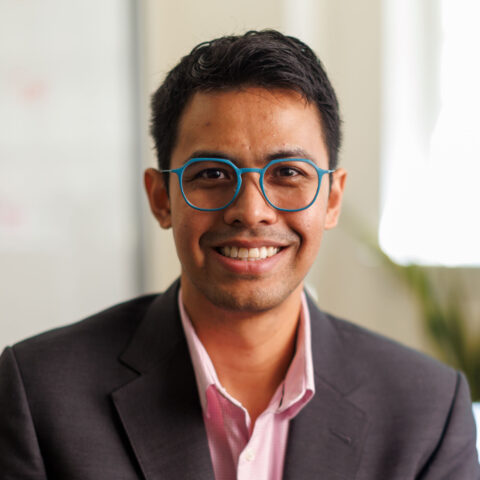
Meet Fikri Pitsuwan, Assistant Teaching Professor
Professor Pitsuwan’s research is in applied microeconomic theory. He teaches courses in microeconomics, game theory, decision theory, market design, and the economics of networks. Pitsuwan is a Cornell alum and was recently featured in the Brooks School’s Policy is Personal video.
Q: Tell us about your academic discipline.
I study microeconomics, specifically market design. Market design is about shaping systems so individual incentives lead to better collective outcomes. The challenge is to design institutions that align self-interest with the common good.
Q: What led you to study it?
In college, I realized that many of the world’s most pressing challenges, such as climate change, corruption, and ethnic conflict, are manifestations of the tragedy of the commons, where self-interest and collective interest diverge.
That realization guided me toward graduate study and continues to drive my research. I focus on how societies provide and sustain public goods, and I’ve come to see that one of the most powerful mechanisms is also the simplest: creating a sense of belonging. When people feel they truly belong to a group, their definition of self-interest expands, and cooperation becomes possible and easy to sustain.
Q: Why did you choose to teach at the Brooks School?
The Brooks School is unique because it brings together people from every field. That mix of perspectives makes it a powerful place to tackle complex problems, since solutions are always stronger when they draw from different disciplines and experiences.
What makes it special is that we are all different in our backgrounds, disciplines, and perspectives, but we feel that we belong to the same community. That sense of belonging drives the School forward. For me, it is exciting to teach in an environment where students and colleagues bring insights from economics, political science, environmental studies, and beyond, pushing all of us to think more creatively about policy and connecting ideas that might not otherwise intersect.
For example, one of my colleagues studies the pathways and processes of refugee resettlement. In my own market design class, I cover how matching theory—where there are two sides of the market, one with preferences over the other side—can be used to place refugee families in cities and locations where they are most likely to thrive.
Together, those perspectives illustrate what makes Brooks special: bringing different approaches into the same conversation, we can design policies that are both rigorous and human-centered.
Q: If you could tell prospective students one thing about why “policy is personal,” what would it be?
Our students are deeply engaged in today’s problems. They don’t shy away from trying to solve big challenges. They have the tools, the information, and the knowledge to do so. But at the end of the day, policy is personal. It’s about making hard judgments. Technology, data, and AI can inform us, but they cannot tell us what to do. We are the ones who must make those tough choices.
Q: What gives you hope about the future of public policy and the next generation of leaders?
My students give me hope. They take on big challenges like climate change, inequality, or democracy. They bring creativity and optimism to each problem, and they think not only in terms of efficiency or growth, but also in terms of belonging and fairness. They want to design institutions and policies that align individual incentives with collective well-being. That energy and perspective convince me that the future of public policy is in good hands.
Q: Do you have any advice for Brooks students on how to make the most of their time here?
Go to office hours even if you don’t have any questions. Chat with your professors about your interests and their interests, and get to know them as people. It usually pays off in ways you don’t anticipate.
Q: As a Cornell alum (PhD in Economics), do you have a favorite study spot or place to recharge on campus?
I have two specific study spots, depending on what needs to get done. If I’m in need of inspiration, I like the armchair by the window in Olin Library that looks out onto the Arts Quad. For deep work, I go down to the lower level of the Math Library, to one of the cubicles tucked away deep inside. For recharging, it’s definitely the Overlook in the F. R. Newman Arboretum.
Q: What do you like to do in your spare time? Any favorite Finger Lakes Region activities?
I’m usually on a mountain in my spare time—going uphill in the summer (hiking up Cascadilla Gorge Trail) and downhill in the winter (snowboarding at Greek Peak).