Carbon Pricing and Political Will: Why Economic Theory Meets Resistance in Practice
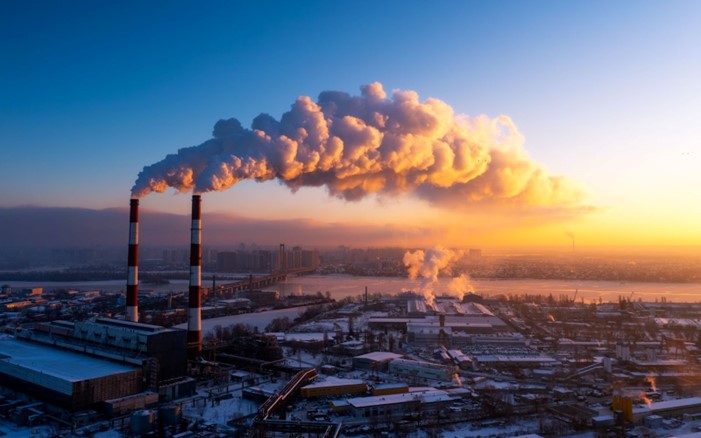
According to Cambridge University Press’s Why We Should Support Carbon Prices, economists universally agree that putting a price on carbon, via a tax or emissions trading scheme, is one of the most efficient ways to reduce greenhouse‐gas emissions by internalizing the negative externality of fossil‐fuel use. For example, a well‐designed carbon price aligns private incentives with the social cost of emissions and nudges the economy toward cleaner choices.
Yet in practice, many jurisdictions struggle to adopt sufficiently strong, politically sustainable carbon‐pricing policies. Why does an idea that seems so elegant in theory hit so many roadblocks in the real world?
The Economic Case for Carbon Pricing
At its heart, carbon pricing is about making emissions visible in economic decision‐making. Polluters face a cost for emitting CO₂ (or equivalent), which pushes them toward low‐carbon alternatives or innovation. The economics literature argues that this is far more efficient than trying to pick and subsidize every specific technology.
- Revenue‐raising: Carbon pricing can generate revenue for the government, which may be used to reduce other taxes or invest in green infrastructure.
- Clear signal: It gives a transparent, market‐based signal to industry and consumers.
- Flexibility: Firms and households choose their own abatement path; it avoids heavier command‐and‐control regulation.
So, from a purely economic theory standpoint, carbon pricing is the go-to tool for tackling climate change. The problem? The theory assumes a lot of things: perfect markets, no political constraints, and rational actors focused solely on costs and benefits. Reality is messier.
Why Political Will Often Fails to Match Theory
Here we get into the core of the problem: why economic logic meets resistance when implementing carbon pricing. Several interrelated reasons:
- Distributional concerns and fairness: Even if a carbon price is efficient, it may be politically unpopular if certain groups bear disproportionate burdens. For example, lower-income households often spend a higher share of their budget on energy and transportation. Research shows many carbon‐pricing schemes tend to be regressive in developed countries unless designed carefully. If citizens believe they will lose—or that “others” will benefit at their expense—the policy becomes politically vulnerable.
- Trust in government and belief in the mechanism: Public support hinges on trust: Do people believe the government will use the revenue fairly? Do they believe the tax will actually reduce emissions? In a Swedish case study, opposition was stronger among those with low trust in government or who didn’t believe in the Pigouvian mechanism (i.e., “charging emissions will reduce them”).
- Political economy of concentrated interests: Large, carbon‐intensive firms, industries with high sunk assets, or regions dependent on fossil fuels have strong incentives (and often political power) to resist or derail carbon pricing. The public‐choice view emphasises that well‐organized, concentrated losers can exert more pressure than the dispersed winners.
- Visibility of costs vs. invisibility of benefits: The cost of carbon pricing (higher fuel/energy prices) is immediate and visible to voters; the benefits (lower climate risk, cleaner air) are more abstract and delayed. That dynamic makes it hard to build political support.
- Institutional and structural constraints: Different jurisdictions vary in their political institutions, public attitudes, strength of fossil‐fuel sectors, and governance quality. The determinants study found that good governance and favorable public attitudes statistically increase the likelihood of higher carbon prices.
- Implementation design weaknesses: Even when carbon pricing is adopted, design flaws (scope too narrow, price too low, exemptions too generous) often undermine effectiveness. For example, critics argue that many schemes are too weak to drive real change.
Bridging the Gap: What Makes Carbon Pricing Politically Feasible?
So if we accept that carbon pricing is theoretically sound but politically challenging, what can policymakers do to increase the odds of success?
- Revenue recycling and compensation: One of the most‐cited strategies is to use the revenue to compensate those who are negatively affected or to reduce other taxes. This helps improve fairness and public support. For instance, rebates, lump-sum transfers, and use for green investments.
- Transparent, credible use of revenue: It’s not enough to say, “We’ll give you money back.” The public must trust that the government will follow through. Institutions and governance matter.
- Phased and incremental introduction and communication: Introduce the policy gradually, explain it well, and ensure that people understand the rationale. Trials, escalators (gradually rising prices), and clear timelines help.
- Complementary policies and sequencing: Because political constraints limit the immediate full‐strength price, pairing carbon pricing with other policies (subsidies for clean tech, support for transition regions) can help build a coalition and reduce resistance. The “carbon pricing under political constraints” paper develops this view.
Institutional design that protects competitiveness and leakage concerns: Address concerns that domestic firms will suffer relative to foreign competitors. This might include border adjustments, exemptions, phased coverage, or regional cooperation.
Building Trust Through Leadership: How You Can Make a Difference
The economic theory of carbon pricing is powerful and attractive, but political will is often the bottleneck. The mismatch arises because real‐world politics involves distributional fights, institutional constraints, trust issues, and concentrated interests. To succeed, carbon pricing must be designed not just as an economic instrument but as a political instrument: fair, credible, understandable, and embedded within a broader transition strategy.
If policymakers treat carbon pricing as “just another tax,” they will likely lose the public’s support and the political backing. But if they design it with fairness, transparency, and sequencing in mind, it becomes far more feasible. The transition to a low‐carbon economy is not only an economic problem; it’s a political one, and success depends on aligning both.
That’s precisely where programs like Cornell University’s Master of Science in Environmental and Sustainability Policy (MS-ESP) come in. This 12-month Ivy League degree at Cornell Jeb E. Brooks School of Public Policy trains future leaders to navigate the intersection of law, economics, data, communication and ethics—the very tools needed to make policies like carbon pricing both effective and politically viable. Students gain hands-on experience through capstone projects and can tailor their studies across multiple focus areas, preparing them for impactful roles in sustainability, resource management, renewable energy, and corporate consulting sectors.
In a world where technical solutions exist but political alignment lags, the MS-ESP program equips graduates to bridge that gap and turn sound economic ideas into policies that are fair, credible, and actionable, driving real progress toward a sustainable future.
Hear More About the MS-ESP:

Request More Information
MS in Environmental and Sustainability Policy (ESP):
Turn your passion for the planet into a rewarding career.