
International Monitoring and Domestic Accountability: Evidence from the United Nations Human Rights Council
This article examines how international monitoring affects legal accountability for human rights violations. International organizations often publicize human rights violations to pressure non-compliant states to change their behavior; however, recent research suggests that publicity can prompt intransigence or backlash, undercutting the advancement of human rights. Drawing on the sociological concept of reactivity, I argue that states respond to monitoring strategically: they adopt some visible accountability measures to signal their intention to comply, while also attempting to reduce the risk that future violations will be uncovered. To test this argument, I leverage a lottery used to determine the schedule of Universal Periodic Review, a human rights monitoring mechanism implemented by the United Nations Human Rights Council. Consistent with my argument, I find that monitoring increases the likelihood that political prisoners are released and that government officials are prosecuted for past violations, but decreases the likelihood that truth commissions are created.
Speaker
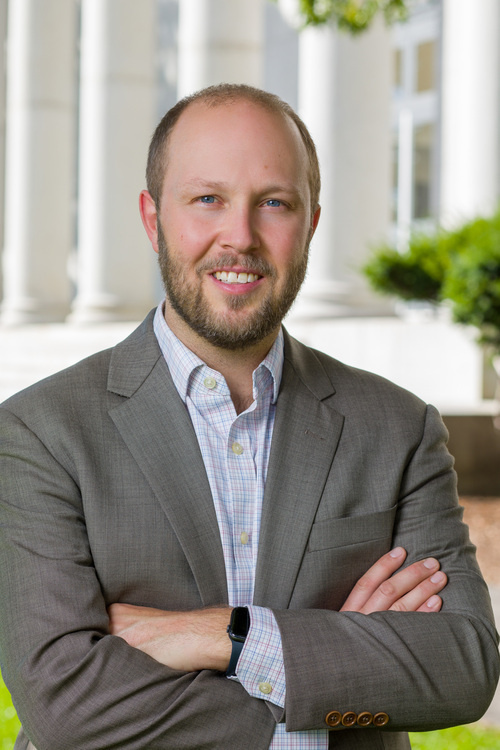
Averell Schmidt is an Assistant Professor in the Department of Government and in the Jeb E. Brooks School of Public Policy at Cornell University. He studies international relations, with a focus on the politics of international law and organizations. He received his Ph.D. from Harvard University in 2024, and joined Cornell in 2025 after completing a postdoctoral fellowship at Brown University.
Host
Reppy Institute for Peace and Conflict Studies, part of the Einaudi Center for International Studies