
Making Policy Personal: Bayan Al-Hindi MHA ‘25
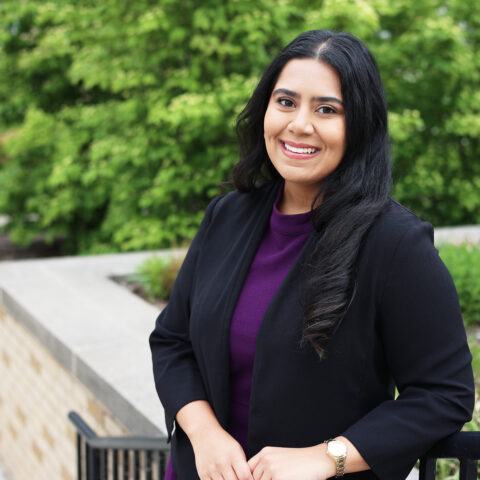
Bayan Al-Hindi MHA ’25
Growing up as a big sister to a brother with disabilities gave Bayan Al-Hindi a profound understanding of the impact the health care system can have on a family medically and emotionally. That experience motivated her to look for an MHA program that could help her turn into a leader and innovator in the health care field who could drive meaningful change. Bayan was ultimately drawn to the Brooks School’s Sloan MHA program because of its interdisciplinary approach, world-class faculty, and strong sense of community. After graduation, Bayan will start the next phase of her career as an administrative fellow at UCHealth’s University of Colorado Hospital.
Q. What motivated you to pursue a Master of Health Administration, and how has the program shaped your understanding of health care leadership?
I have always been drawn to health care because of my family’s personal experiences with the system from a young age. As the older sister to a brother with a disability, I witnessed firsthand how deeply the health care system can impact a family, not just medically, but emotionally and socially as well. These early experiences instilled in me a strong sense of responsibility and purpose. I knew I wanted to be part of the effort to improve how care is delivered, coordinated, and experienced, especially for those who are most vulnerable. Over time, that purpose evolved into a clear professional goal: to become a health care leader who drives meaningful change.
Q. How has your coursework or internships prepared you for the realities of managing health care organizations?
My coursework and internships have been instrumental in preparing me for the complex realities of managing health care organizations. In the classroom, I gained a strong foundation in finance, operations, strategy, and policy, which helped me understand the broader ecosystem of healthcare delivery. Courses like Health Care Financial Management and Economics of Healthcare Markets taught me how to analyze performance metrics, develop sustainable business plans, and think critically about organizational challenges.
At the same time, my internship brought those concepts to life. I had the opportunity to work within project management for the opening of a new ambulatory surgical center at NewYork-Presbyterian Hospital. There, I collaborated with cross-functional teams and saw firsthand how leaders balanced patient care, regulatory compliance, and team dynamics.
Perhaps most importantly, both my coursework and internship taught me how to ask the right questions, navigate ambiguity, and communicate effectively across disciplines, which are skills that are essential for any healthcare leader.
Q. In what ways did the Brooks School support your learning and problem-solving abilities?
The school’s resources played a large role in strengthening both my learning and problem-solving abilities. The faculty were not only subject matter experts but also accessible mentors who encouraged critical thinking and challenged us to apply theory to real-world situations. Their insights, especially during case-based discussions, pushed me to look at problems from multiple angles.
Certain classes, such as Population Health Management and Health Care Strategy, gave me structured frameworks to break down complex challenges and approach them with confidence. These courses taught me how to evaluate trade-offs, understand stakeholder perspectives, and make data-informed decisions.
Studying Health Care Administration at the Brooks School
Become a health care leader with the Cornell Sloan Master of Health Administration (MHA), a dynamic, business-focused residential degree designed for those who want to shape the future of health care. Whether you’re just starting your career or advancing as an experienced professional, the Sloan Residential MHA equips you with the tools to lead, adapt, and make a meaningful impact across the health care industry. Explore the 2-year residential MHA curriculum and application process here.