Policy Briefs
New BTPI report on AI regulation
The Brooks Tech Policy Institute, with support from the Jain Family Institute (JFI), has released a new report that offers a a high-level framework to analyze regulation of AI technologies.
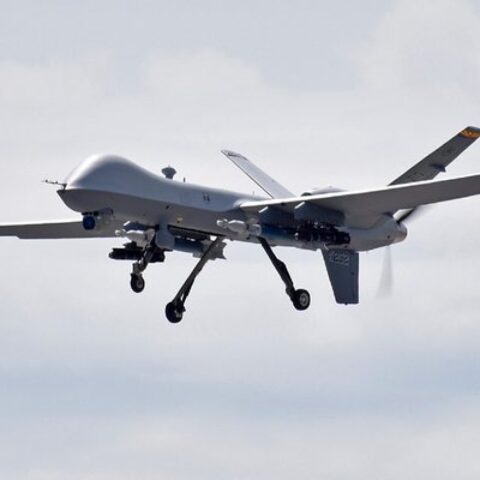
Defending America Against Drones; A Whole-of-Government Approach
Paul Lushenko, Joseph Amoroso
On October 7, 2023, Hamas used drones to
initiate its attack on Israel. On June 1, 2025,
Ukraine conducted Operation Spider Web,
using over 100 drones to strike Russian
military bases and destroy one-third of the
country’s strategic bombers. Later in June,
Israel conducted Operation Roaring Lion,
using drones to destroy Iran’s air defenses
and enable jets to target Iranian missile
production facilities.

New BTPI Report: “U.S. Must Invest in Biomining to Secure Mineral Independence”
The Cornell Brooks Tech Policy Institute (BTPI) has released a new report urging federal action to advance biomining, the use of microorganisms to extract metals from ores and waste streams. The study highlights that critical minerals such as rare earths, cobalt, nickel, and lithium are indispensable for U.S. defense systems, clean energy, and advanced electronics, yet China controls more than 80–90 percent of global refining capacity—creating chokepoints that expose serious national security risks. While biomining offers cleaner, lower-cost processing that can tap low-grade ores and reduce environmental harms, the U.S. remains at the research stage with startups and pilots but no commercial-scale operations, falling behind countries like Chile and Finland. The report’s findings underscore that without stronger federal investment to bridge laboratory breakthroughs into industrial deployment, the U.S. risks losing the opportunity to secure domestic mineral independence and safeguard its strategic resilience.

THE MILITARIZATION OF OUTER SPACE: LEGAL, ETHICAL AND STRATEGIC IMPLICATIONS OF COMMERCIAL INTERESTS
Harrison Mellor
As governments grow increasingly dependent on commercial space systems for military advantage, private companies are thrust into an impossible bind: either enable one side and risk being seen as a belligerent or deny access and potentially alter the course of a war. This dilemma raises an important and difficult question. When commercial assets become legitimate military targets, does attacking them constitute an act of war? Despite these pressing issues around commercial space assets, rules governing them are decades out of date. As private actors become operational gatekeepers in space warfare, a dangerous policy vacuum has emerged; no clear legal or institutional framework exists to guide their actions or assign responsibility. The line between commercial and military space has blurred.

Dark Skies: Criminal Drone Operations Targeting Prisons
The Tech Policy Institute’s newest practitioner brief, “Dark Skies: Criminal Drone Operations Targeting Prisons,” by Jack Venables, documents how organized crime is exploiting off-the-shelf drones to smuggle contraband, disrupt prison operations, and erode custodial security across the UK. The report details escalating tactics (including swarming and heavier payloads), pinpoints legislative and resource gaps, and outlines pragmatic counter-UAS steps—from stronger protected-airspace enforcement to regional trigger plans and procurement guided by operational specialists—to protect the prison estate and public safety
Defending America’s Skies: Public Support for Homeland Counter-Drone Operations
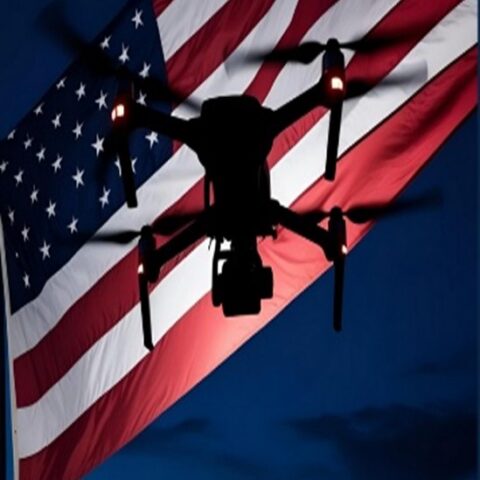
Brooks Tech Policy Institute’s Non-Resident Senior Fellow Dr. Paul Lushenko and Dr. Jennifer Spindel of the University of New Hampshire in a new study challenge the assumption that Americans oppose counter-drone operations on domestic soil. The study provides the first experimental evidence on this topic and was presented to the National Security Council at the White House. According to the study there are three main factors that influence public support, namely: the nature of the drone incursion, the identity of the authority authorizing the response, and the perceived impact on public safety. The findings indicate that despite concerns about potential unintended consequences, such as loss of life or property damage, the American public generally supports such operations.
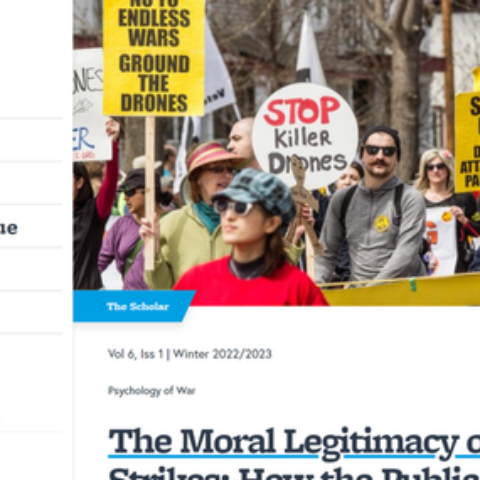
Is remote-warfare moral? Read Deputy Director Paul Lushenko’s recent review of U.S. Air Force Lieutenant Colonel Joseph Chapa’s new book on the...

Do social media monitoring protocols, such as journalistic factchecks, mitigate false narratives about...
This study employs an experiment embedded on a survey of 1,194 US adults in June 2021 to examine how communications about vaccine efficacy affect vaccine...
This study uses a national survey examining people’s understandings about the timing of vaccine protection, willingness to continue to wear masks after being vaccinated,...

Existing research provides little insight into whether the same factors that affect Americans’ likelihood of accepting initial vaccination against COVID-19 also affect booster...

What are the implications of legal cannabis use for prescription drug use, especially among Medicaid...